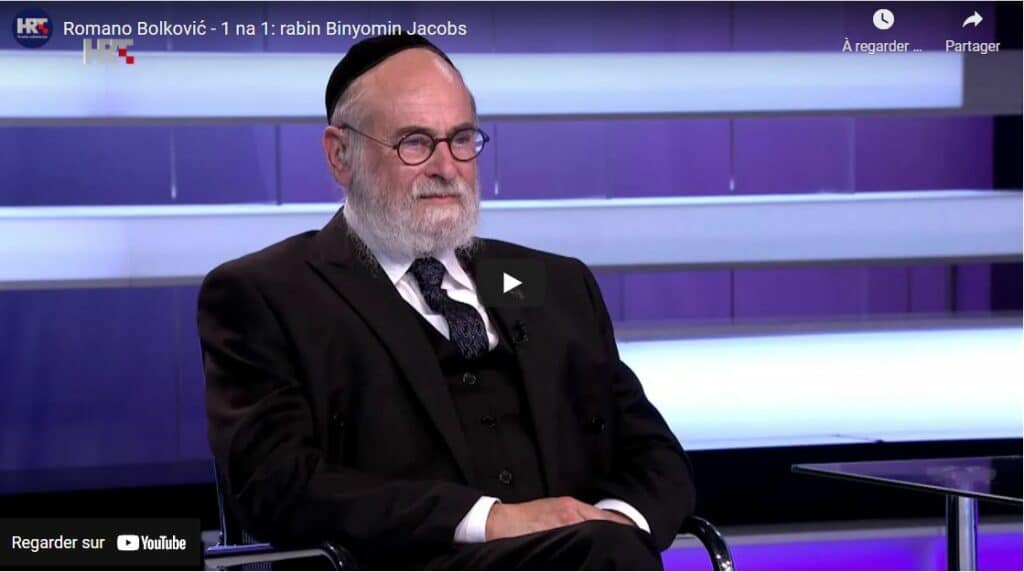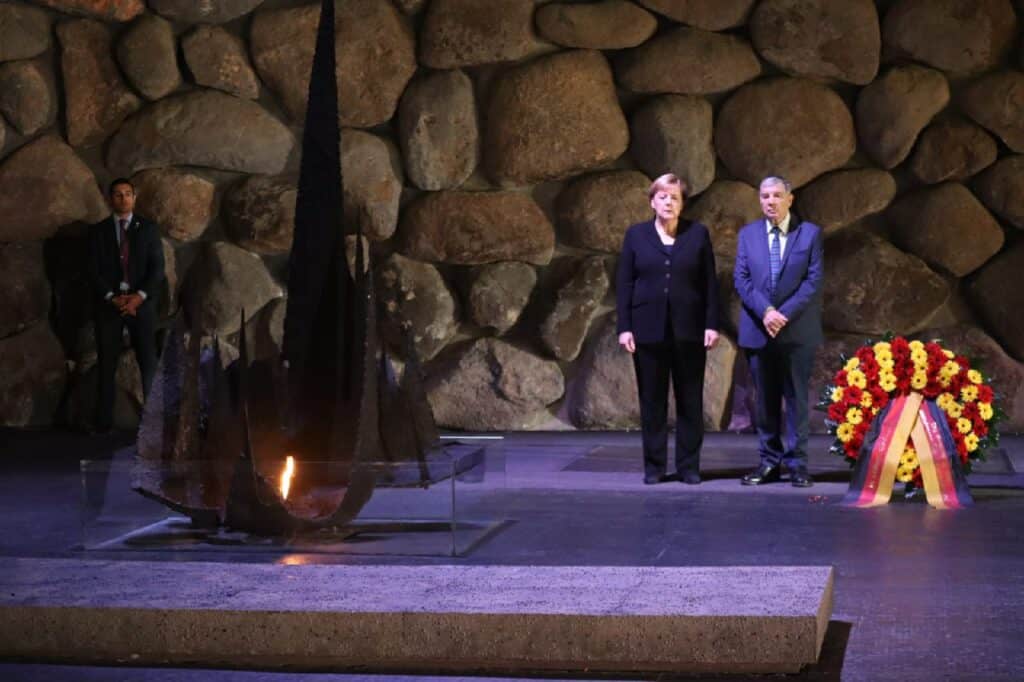
This year “MAHAR” (tomorrow) conference was dealing with the important question: “Whither will Jewish Diaspora go?”
Rabbi Menachem Margolin (Founder of European Jewish Association) was invited to share his thoughts and ideas on the issue of the European Jewry Future.
For more information on the conference klick HERE
Handwritten notes for speeches given by Nazi dictator Adolf Hitler have been sold at auction in Munich. Jewish groups had expressed concerns that they might serve as encouragement to neo-Nazis.
An auction house in Munich on Friday sold notes handwritten by Adolf Hitler for speeches he gave before World War II, despite criticism from representatives of the Jewish community.
The manuscripts were purchased by anonymous bidders, with all of them going for far more than their starting prices. The top price of €34,000 ($40,300) was reached by a nine-page document with notes for a speech to new military officers in Berlin in 1939, just eight months before World War II began.
The Hermann Historica auction house has defended the sale in a telephone interview with The Associated Press, saying that the notes were of historical significance and should be kept in a museum or given to researchers.
Vehement criticism
Ahead of the auction, representatives of the Jewish community criticized the sale of the documents, saying they could serve as welcome fodder to neo-Nazis at a time when anti-Semitism and anti-Semitic crimes are on the rise in Germany and Europe.
“I cannot get my head around the sheer irresponsibility and insensitivity, in such a febrile climate, of selling items such as the ramblings of the world’s biggest killer of Jews to the highest bidder,” Rabbi Menachem Margolin, the head of the Brussels-based European Jewish Association, said in a statement. “What auctions like this do is help legitimize Hitler enthusiasts who thrive on this sort of stuff.”
The article was published on DW.com
Diary March 18
Concerns about politics.
One of the prominent figures of the Jewish Netherlands, who is apparently occasionally
tormented by the disease called jealousy, approached me with the comment that he had
heard that I will be speaking next Sunday for the NIK on Zoom because of Pesach and
expressed the hope that I would not speak about anti-Semitism again and would not have
my message / lecture included with 'those Christians'.
Of course I don't have to justify myself and I can do whatever I want, but it bothered me
anyway. Because with "those Christians" professional recording equipment was available
and "those Christians" were willing to make a good recording completely free of charge, I
had made my NIK Hanukkah presentation with and by "those Christians".
Some years ago I had received a similar comment, from that same person, about "those
Christians." I needed to have less contact with them. I understand that setup. What I did not
fully understand, however, was that the same critic then went to "those Christians" to ask
for financial support for his, otherwise fine, projects.
Nothing new under the sun. I remember speaking to an eminent physician some time ago.
This ‘eminence’, he told me personally, was not so much down to his expertise in his field,
but as a much about his political qualities. No, he was not in politics, he was referring to
politics at the top of his university hospital. When I heard a little bit of that politics I
immediately thought of the rabbinic world! (Just kidding, because rabbis don't do politics!)
Because there is politics everywhere. Especially in the real and necessary democratic
politics: The elections!
I haven't been able to sleep all night. When I looked at the new composition of the House of
Representatives, I was overcome with concern. I hope and pray that I misjudge it
completely, but I fear it. Of course, there can be criticism of Israeli Politics, that does not
have to be a sign of anti-Semitism.
But if there is only talk about Israel and not a word is mentioned about the feudal
dictatorships of the countries around Israel, then I do not understand.
I understand and accept that one of our prominent mayors in a speech at #
MayorsAgainstAntisemtism # claims that criticism of Netanyahu is allowed, as well as
criticism of Rutte. But that's not the problem. Criticism of Netanyahu is allowed, 50% of
Israel criticizes him and that does not degrade them to anti-Semites.
The problem is that there is almost exclusively criticism of Israel. That Israel is by far at the
top of the list for UN Resolutions. The role of a mayor should be in trying to connect his
townspeople, and that does not happen by importing sensitive foreign conflicts. Do I think
this mayor is anti-Semitic? Absolutely not! Do I think this mayor should be allowed to
criticize Netanyahu? Sure! But what I regret is that criticism of Israel unfortunately and
often unintentionally leads to anti-Semitism.
How often am I not allowed to explain that I speak Dutch, although I am a Jew but not born
in Israel. The superficial one-sidedness in the experience, however nuanced a mayor may
present it, causes anti-Semitism here in our country. And so: if the mayor believes we
should keep the Middle East problem out of the city, then criticize Israel, Jordan, Yemen,
Saudi Arabia, Egypt, North Korea, China, on… and on…. But even better: let the mayor try to
bind the various population groups within the city limits and call them to develop activities
that unite together. And then, if connections and friendships have arisen, then, despite the
diversity, the friendship itself can look at bottlenecks and differences of opinion that
seemed unmentionable. Do you think that can succeed? Often not, but sometimes it does.
And sometimes I cherish that, because I have sometimes been able to experience this often!
And to the prominent Jewish Dutchman I would like to say: next week it is Pesach and Jews
all over the world read the Hagadah, which describes the Exodus from Egypt at that time.
And what do we read there about the present and now? "Because in every generation we
are rebelled against us to destroy us," literally. And then the text continues and says that
G-d will save us in the end. The Jewish people live and survive, but all kinds of things happen
along the way. We must know, prevent and combat that, but not deny it! I hope that the
new House of Representatives will want to fight that battle with us and will want to exercise
vigilance.
An Israeli rabbi explains why he swapped the West Bank settlement of Tekoa for strengthening cross-community ties in Malmö
“We, the Jews and Muslims in Malmö, have only one thing to say to one another: Salaam, Shalom.”
Those were the words chosen by the Jewish and Muslim communities for their public declaration in the southern Swedish city of Malmö last month, inspired by an earlier advertisement in the Daily Telegraph in the UK.
In previous years, the integration problems faced by Malmö’s large, mainly Muslim migrant population have earned it a reputation as a “problematic city”, with frequent reports of antisemitic attacks against people and property.
But the advert, published in the Swedish daily Sydsvenskan on a Friday last month to mark the end of Eid, was part of an effort to project a different image for the city.
“We, the Jews and Muslims living in Malmö, are uniting against any display of discrimination, hatred, prejudice and xenophobia,” the advertisement read.
“Jews and Muslims in Malmö stand together in the fight against antisemitism, Islamophobia, and any form of racism and discrimination against minorities.
“We believe meeting and getting to know one another and our traditions will help us better appreciate and respect one another.
“We are convinced this is the only way forward for a shared, better and safer future in the city of Malmö. Shabbat Shalom, Eid Mubarak.”
It was signed by Malmö’s Jewish and Muslim communities as well as Amanah, a project aimed at building trust and better relations between the two.
Such an advertisement would not have been possible even a year ago, Amanah’s Israeli co-director Moshe David Hacohen said.
Rabbi Hacohen, 38, started the organisation with local prominent imam Salahuddin Barakat after moving to Malmö from the West Bank settlement of Tekoa with his family in the spring of 2017.
His explicit mandate was to both serve as the city’s rabbi and to foster dialogue with the Muslim community.
Since then, he and Imam Barakat have visited dozens of schools and organised text-based learning nights covering topics relevant to both faiths — such as the binding of Isaac (or Ishmael, according to the Muslim tradition); circumcision; and rules relating to food.
According to the rabbi, the advertisement shows that the work to build trust between the two communities and to change the conversation about them is bearing fruits.
“We didn’t want people to think that our initiative was carried out by individuals without the backing of the larger communities,” he said.
“For this reason, after Salahuddin and I came up with the idea of an ad similar to the one published in the UK, we brought it before the boards of the Jewish Community of Malmö, and the Malmö Muslim Network.
“After all the work we have done together, they approved it without thinking twice.”
He also attended an iftar, the meal that breaks the Ramadan fast of every evening, with the representatives of ten different Muslim communities.
But not everything has gone smoothly.
Rabbi Hacohen had been invited to speak at a major Eid celebration attended by over 10,000 people, but the invitation was rescinded by organisers after some protests.
“Some people call me naïve and think that I should be more demanding,” the rabbi said.
“I believe it is crucial to understand how difficult it is for many Muslims to accept someone like me, not only a rabbi, but an Israeli, a settler even,” he explained.
“However, at the same event, before the same audience, the mayor of Malmö Katrin Stjernfeldt Jammeh mentioned the ad and the importance of our work and for me this is already a step forward.”
“We still have a long way to cover, but it is important to acknowledge the progress we are making.”
The article was published on The JC
| Cookie | Duration | Description |
|---|---|---|
| cookielawinfo-checkbox-analytics | 11 months | This cookie is set by GDPR Cookie Consent plugin. The cookie is used to store the user consent for the cookies in the category "Analytics". |
| cookielawinfo-checkbox-functional | 11 months | The cookie is set by GDPR cookie consent to record the user consent for the cookies in the category "Functional". |
| cookielawinfo-checkbox-necessary | 11 months | This cookie is set by GDPR Cookie Consent plugin. The cookies is used to store the user consent for the cookies in the category "Necessary". |
| cookielawinfo-checkbox-others | 11 months | This cookie is set by GDPR Cookie Consent plugin. The cookie is used to store the user consent for the cookies in the category "Other. |
| cookielawinfo-checkbox-performance | 11 months | This cookie is set by GDPR Cookie Consent plugin. The cookie is used to store the user consent for the cookies in the category "Performance". |
| viewed_cookie_policy | 11 months | The cookie is set by the GDPR Cookie Consent plugin and is used to store whether or not user has consented to the use of cookies. It does not store any personal data. |