
Joint Statement of Special Envoys and Coordinators Combating Antisemitism

The barbaric attack of Hamas terrorists on Israel on 7th October, resulted in the most lethal assault against the Jewish people since the Holocaust. More than 1400 Jews – women, children, men, and the elderly, including Holocaust survivors – were tortured, raped, and murdered. Over two hundred were taken hostage. These events have an immense impact on Jewish communities worldwide.

Many national leaders and heads of international organizations across the globe have condemned these acts in the strongest terms and expressed their full support and solidarity with the State of Israel. At the same time, there have also been demonstrations in many countries – including in some countries and regions which we represent – in which individuals praised these heinous actions of Hamas, “celebrated” the murder of Jews, and even called for more antisemitic assaults.

Jewish communities are fearful and are being threatened. Synagogues and other Jewish sites have been attacked. Schools have closed since they can no longer guarantee the safety of their students. Shabbat gatherings require the presence of armed guards for protection. In some cities, Jews are being harassed and accosted on the streets. Posters of the captive hostages are defaced and torn down. Antisemitism online has surged in an unprecedented way.

We, the undersigned Special Envoys and Coordinators, have a shared mandate to combat antisemitism and to safeguard Jewish life. We commend the resolute action of many national authorities to protect Jewish communities, as Jews around the world have not faced such challenges since the Holocaust. Mindful of those darkest days, we stand with the Jewish people. We will do everything in our power to see that hatred against Jews is rebuked and that Jewish life flourishes in peace. Antisemitism and all forms of hate are incredibly harmful and unacceptable.

Therefore:

· We call on governments to assess the needs and provide the necessary security assistance that Jewish communities require at this time of crisis.

· We urge police and law enforcement to be vigilant of threats against Jews and to be aware that Jewish people around the world should not be held responsible for the words and actions of the Israeli or any other government, as illustrated by the non-legally binding International Holocaust Remembrance Alliance Working Definition of Antisemitism.

· We denounce antisemitic acts taking place on some campuses and urge university administrators to condemn them and ensure that their Jewish students, like all other students, have the safety and support needed in these difficult times, to enjoy their right to education.

· We urge civil society – including sports federations, religious communities, the cultural sector and academic circles – not to stand by or stay silent, but rather use their influence to effectively counter antisemitism and promote public acts of solidarity.

· We are distressed about the online upsurge of antisemitic messages, disinformation, hate speech, and terrorist content, which instigate real world hate crimes and threaten the very social cohesion that binds our democratic societies together. We decry the social media platforms that amplify and multiply this content and call on them to act in line with the law and their own terms of service.

History has taught us that at times like these, we must speak up and cannot be indifferent.

“Never again” is now!

Signed,

Chryssoula ALFIERI
Ambassador, Special Envoy of the Ministry of Foreign Affairs for Combatting Anti-Semitism and for the Protection of Holocaust Remembrance, Greece

Andrew BAKER
Personal Representative of the OSCE Chairperson-in-Office on Combating Anti-Semitism

Luiz BARREIROS
Head of Delegation to IHRA, Ministry of Foreign Affairs, Portugal

Delphine BORIONE
Ambassador at Large for Human Rights responsible for inter-national issues relating to the Holocaust, looted property and remembrance, France

Michal COTLER-WUNSH
Israel’s Special Envoy for Combating Antisemitism

Arvydas DAUNORAVIČIUS
Lithuania’s Ambassador-at-Large for the Holocaust remembrance issues

Irena DIMITROVA
Deputy Minister of Foreign Affairs of Bulgaria and National Coordinator on combating antisemitism

David FERNANDEZ PUYANA
Ambassador, Permanent Observer of the UN University for Peace to the UN Office & intl. organizations in Geneva & Permanent Delegate of UPEACE to UNESCO

Simon GEISSBÜHLER
Ambassador, Head of Peace and Human Rights Division,
Federal Department of Foreign Affairs, Switzerland

Alexandre GUESSEL
Special Representative of the Secretary General on antisemitic, anti-Muslim and other forms of religious intolerance and hate crimes, Council of Europe

Michel HEINTZ
Interministerial Delegate in charge of the coordination of policies to combat racism, anti-Semitism and anti-LGBTIQ+ hatred, Luxembourg

Felix KLEIN
Federal Government Commissioner for Jewish Life in Germany and the Fight against Antisemitism

Olivier KLEIN
Former Minister, French national Delegate against racism, antisemitism and LGBTI-phobia

Robert KLINKE
Ambassador, Special Representative for Relations with Jewish Organisations, Issues relating to Antisemitism, International Sinti and Roma Affairs, Holocaust Remembrance

Maria Fabiana LOGUZZO
Ambassador, Argentina’s Special Representative for the fight against Antisemitism and Head of Delegation to IHRA

Fernando K. LOTTENBERG
Commissioner to Monitor and Combat Antisemitism, Organization of American States

Sara LUSTIG
Special Advisor to the Prime Minister of Croatia for Holocaust Issues and Combating Antisemitism

Deborah LIPSTADT
Ambassador, US Special Envoy to Monitor and Combat Antisemitism

Deborah LYONS
Ambassador, Canada’s Special Envoy on Preserving Holocaust Remembrance and Combatting Antisemitism

Lord John MANN
UK Government Advisor on Antisemitism

Antonio MARTINO
Director, Department for Fostering Austrian-Jewish Cultural Heritage and Combating Antisemitism, Federal Chancellery, Austria

Bogdan MAZURU
Ambassador, Special Representative of the Government of Romania for the remembrance policies and for the fight against antisemitism and xenophobia

Ulf MELGAARD
Director, International law and Human rights, Ministry of Foreign Affairs of Denmark

Jaime MORENO
Coordinator of the Spanish National Plan against Antisemitism and Head of Delegation to IHRA

Giuseppe PECORARO
Italian Coordinator on Combating antisemitism, Italian Government

Rt Hon the Lord Eric PICKLES
UK Special Envoy on Post Holocaust Issues

Robert ŘEHÁK
Czech Republic’s Special Envoy for Holocaust Issues, Interfaith Dialogue and FoRB

Ringo RINGVEE
Estonia’s National coordinator of measures against anti-Semitism

Vince SZALAY-BOBROVNICZKY
Deputy State Secretary, Civil and Social Affairs. Prime Minister’s Office, Hungary

Ulrika SUNDBERG
Special Envoy to the OIC, Intercultural and Interfaith Dialogue of Sweden

Eddo VERDONER
National Coordinator on Combating Antisemitism, The Netherlands

Katharina VON SCHNURBEIN
European Commission Coordinator on combating antisemitism and fostering Jewish life
Additional Articles

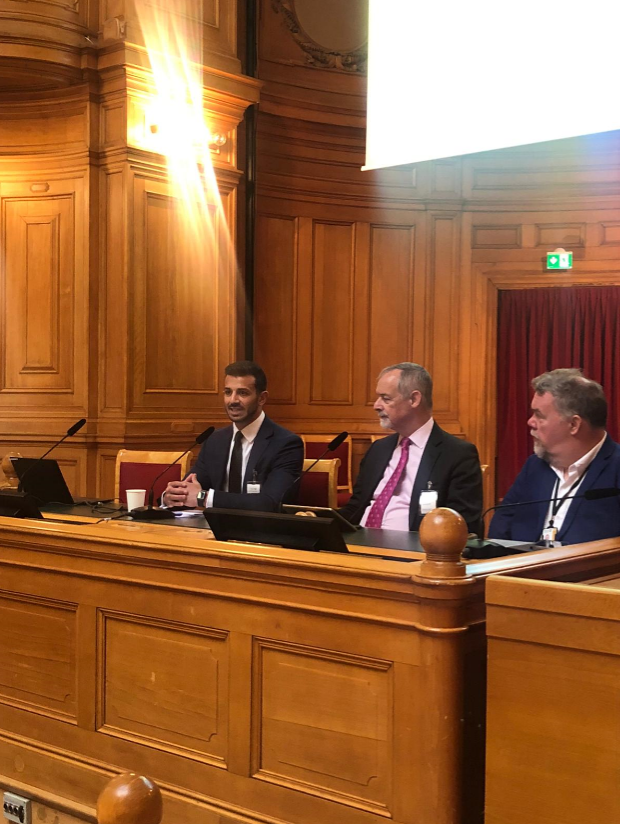
UANI and European Jewish Association Co-Host Event at Sveriges Riksdag to Expose Iranian Regime's Presence in Sweden

In a significant collaborative effort, United Against Nuclear Iran (UANI) and The European Jewish Association joined forces to host a pivotal event within the esteemed halls of the Sveriges Riksdag in Stockholm. This event served as a platform to unveil the findings of UANI’s extensive investigation into the Iranian regime’s infiltration within Sweden.

Attendees gathered with a shared commitment to shed light on the presence and activities of the Iranian regime within Swedish borders. The event brought together influential figures from diplomatic circles, government officials, advocacy groups, and concerned citizens, all united in their determination to address this pressing issue.

Throughout the event, speakers highlighted the alarming implications of the Iranian regime’s infiltration, emphasising the need for vigilance and coordinated action. They underscored the importance of raising awareness and implementing strategies to counter such interference, safeguarding Sweden’s sovereignty and security.

With the spotlight firmly on the findings of UANI’s investigation, attendees gained valuable insights into the extent and methods of the Iranian regime’s presence in Sweden. This comprehensive analysis provided a crucial foundation for informed discourse and strategic planning moving forward.

As the event concluded, participants departed with a renewed sense of purpose and resolve. Armed with knowledge and collaboration, they stood ready to confront the challenges posed by the Iranian regime’s infiltration, safeguarding Sweden’s interests and upholding the principles of democracy, security, and sovereignty.

Fernando Pessoa University in Porto has formally adopted the International Holocaust Remembrance Alliance Working Definition of Antisemitism.

We are proud to announce that Fernando Pessoa University in Porto has formally adopted the International Holocaust Remembrance Alliance Working Definition of Antisemitism. This makes UFP the first university in Portugal to officially adopt the IHRA definition. The decision comes at a time when antisemitism is rising sharply across Europe and universities in particular face hostility that often hides behind political slogans. UFP has chosen clarity and responsibility.

The declaration signed with EJA commits the university to use the IHRA definition as a tool to prevent and combat antisemitism in all its forms. UFP pledges to monitor signs of hatred on campus and to promote initiatives that defend human rights. It also commits to integrating awareness of the IHRA definition into its code of conduct. These commitments are outlined in points 1 to 4 of the signed document.

The decision carries both symbolic and practical weight. UFP is known as one of the European universities with the highest proportion of Jewish students.

Rabbi Menachem Margolin, Chairman of the European Jewish Association, said:
“Fernando Pessoa University has shown leadership at a moment when it is needed the most. Many institutions hesitate, yet UFP chose action. Antisemitism cannot be ignored or excused. By adopting the IHRA definition, the university sends a clear message that Jewish students will be protected and respected. We welcome this partnership and hope it inspires others.”

Gabriel Senderowicz, President of the Jewish Community of Porto, said:
“This is a historic moment. It makes perfect sense that the first university in Portugal to adopt the IHRA definition of antisemitism is Fernando Pessoa University. UFP likely has the highest proportion of Jewish students of any university in Europe, with approximately 500 Jewish students. Over the past twelve years, the university has played an important role in the revival of the Jewish Community of Oporto – a result of the welcoming relationship it has maintained with its Jewish students throughout the years.”

Juan Caldés, EJA European Advocacy Coordinator, said:
“We are very happy that Fernando Pessoa University took this step. They see antisemitism for what it is and they refuse to be intimidated by those who spread hate. This creates a stronger and safer environment for Jewish students and for the entire academic community.”

EJA will continue to work with universities across Europe to encourage the adoption of the IHRA definition and to support students who face antisemitism.

REM ΗERITAGE – Holocaust Education Remembrance through Intergenerational Exchange

EJA is honored to take part in an importat project – REM ΗERITAGE – Holocaust Education Remembrance through Intergenerational Exchange.

REM HERITAGE: Holocaust Education Remembrance through Intergenerational Exchange is a European project implemented from April 2025 to March 2027. It brings together partners from five countries to strengthen Holocaust remembrance and the collective memory of other mass atrocities.

The project promotes an innovative intergenerational educational approach, combining shared learning experiences, awareness-raising, and communication activities to maximise visibility and long-term impact across Europe.

Objectives:

The overall objective of the project is to foster critical awareness among young people and students about the Holocaust, while promoting democratic values, tolerance, and respect for fundamental rights.

Through the active engagement of multiple generations, the project aims to preserve and transmit the memories and lessons of Holocaust survivors to younger generations, ensuring that such atrocities are never forgotten.

Methodology:

REM HERITAGE is implemented through a series of coordinated activities across participating countries. These include workshops, training sessions, and interactive educational events designed to bridge generational gaps and deepen understanding.

The project employs innovative pedagogical methods, digital tools, and creative approaches to ensure that learning is both meaningful and accessible. In parallel, online awareness-raising and capacity-building initiatives, including transnational components, support a broader European dialogue on Holocaust education and remembrance.

A central digital platform will host project materials, including media content, workshop results, and digital stories produced by partners.

Project Partners

  1. CARDET – Center for the Advancement of Research & Development in Educational Technology (Cyprus, coordinator)
  2. European Jewish Association ASBL (Belgium)
  3. KMOP – Social Action and Innovation Center (Greece)
  4. Deutsche Schule Athen (Greece)
  5. University of Humanities and Economics in Lodz (Poland)

The project is funded by the European Union. Views and opinions expressed are however those of the author(s) only and do not necessarily reflect those of the European Union or European Commission. Neither the European Union nor the European Commission can be held responsible for them. PROJECT NUMBER: 101196704


The Jewish Representative Council for Birmingham and the West Midlands (UK)

Additional Communities
United State
United Kingdom
Ukraine
Turkey
Schweiz
Switzerland
Sweden
Spain
Slovenia
Slovakia
Serbia