Serbia Joins Ranks of Countries Who Have Adopted International Antisemitism Definition

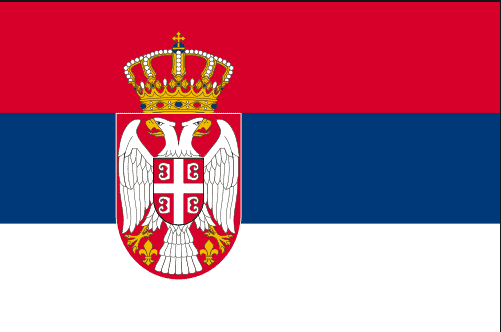
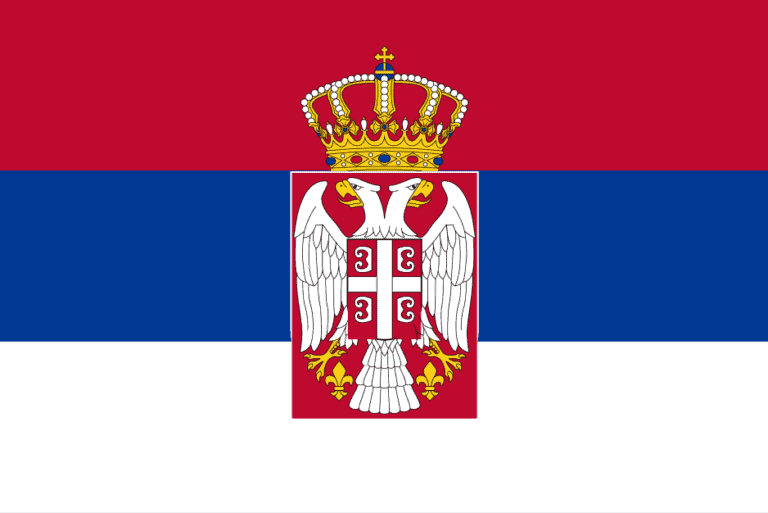
Serbia has become the latest country to adopt the International Holocaust Remembrance Alliance (IHRA) definition of antisemitism.
The Israeli Embassy in Belgrade tweeted on Monday, “We welcome the decision [of the] @SerbianGov to accept the working definition of anti-Semitism of the International Holocaust Remembrance Alliance @IHRA which will help Serbia in recognizing and prosecuting cases of this dangerous phenomenon.”
Before World War II, Serbia had a Jewish population of over 30,000 people. The community was decimated by the Holocaust, with 2/3 of its members murdered by the Nazis.
After the war, most of the survivors emigrated from the country, largely to Israel.
Fewer than 1,000 Jews live in Serbia today.
The IHRA definition says, “Antisemitism is a certain perception of Jews, which may be expressed as hatred toward Jews. Rhetorical and physical manifestations of antisemitism are directed toward Jewish or non-Jewish individuals and/or their property, toward Jewish community institutions and religious facilities.”
The article was published on the Algemeiner

Additional Articles

The Mega Pessover Project

Pesach is approaching and we are happy to announce that our Matzah Handout for the community has begun.
Please click HERE and submit your details.
Free shipping and handling – While stocks last!
please fill the form by 07 March 2021
Form submission is subject to the office approval and does not guarantee receiving the items.

¿Qué sucede con los judíos que permanecen en Ucrania durante la invasión rusa?

BUDAPEST – Algunos judíos se quedan en Ucrania porque no quieren dejar atrás a sus familiares fallecidos, sin saber lo que les depara el futuro, dijo el martes Aliza, una refugiada de la ciudad de Mariupol, en la conferencia anual de la Asociación Judía Europea (EJA) en Budapest.

Casi 5 millones de ucranianos han sido desplazados desde el comienzo de la invasión rusa de Ucrania el 24 de febrero, según las últimas estimaciones de las Naciones Unidas. Actualmente, según las estadísticas de la Agencia Judía, unos 200.000 judíos siguen allí.

“Nuestro pueblo está destruido”, dijo Aliza. “Antes de la guerra, teníamos una comunidad hermosa y pequeña. Era fuerte”. La comunidad judía de Mariupol tenía su propia escuela sinagoga.

“Todos en Mariupol sabían que si venían a nuestra cocina a las 10, obtendrían lo que necesitaban”, dijo Aliza.

El rabino Raphael Rotman, vicepresidente de la Federación de Comunidades Judías de Ucrania, contó innumerables historias de personas que pidieron ayuda y de familias que se reunieron con éxito fuera de las fronteras de Ucrania.

Cuando un amigo le telefoneó para que le ayudara a sacar a sus tíos de Kiev, le respondió que podía conseguirles un coche, pero que tendrían que hacer las maletas en 20 minutos y marcharse. Así lo hicieron.

Otra familia salió de Kiev un viernes por la mañana. Pasaron seis días hasta que toda la familia se reunió.

Aliza señaló que algunos judíos se quedaron en Mariupol porque tienen parientes enterrados allí -algunos en sus propios patios- que murieron por explosiones aéreas o por enfermedades para las que no podían acceder a los medicamentos porque las tiendas estaban cerradas, habían sido bombardeadas o saqueadas.

Recibió una gran ovación de los asistentes a la conferencia.

¿Qué está haciendo la guerra con los judíos de Ucrania?

Rotman relató sus experiencias en Bucha, Irpin y Hostomel -cerca de Kiev- llegando a los ciudadanos de estas ciudades después de ser liberadas.

En abril, después de que las fuerzas rusas abandonaran Bucha, se encontraron decenas de cadáveres en las calles de la ciudad, lo que provocó una gran conmoción en los medios de comunicación internacionales y en los líderes mundiales, cuando ya habían transcurrido dos meses de guerra.

El marido de una mujer murió durante la ocupación rusa; tardó seis días en ser seguro realizar un entierro.

Las familias están siendo separadas, las esposas de los maridos, los hijos de los padres”, dijo Rotman, que ha estado en Ucrania desde el comienzo de la guerra.

Para algunos de los judíos que Rotman conoció mientras luchaban por escapar del país en guerra, conocerlo fue su primera experiencia con el judaísmo.

“Algunas personas nunca habían asistido a un séder de Pascua; fue necesaria una guerra para que salieran. En Shavuot, un hombre que cumplirá 78 años el mes que viene recibió una aliá por primera vez. Era la celebración de su bar mitzvah.

“Estas son algunas de las alegrías a las que tratamos de aferrarnos en esta época de locura e incertidumbre”, dijo.

https://israelnoticias.com/internacional/que-sucede-con-los-judios-que-permanecen-en-ucrania-durante-la-invasion-rusa/

timesofmalta

European Jewish community awards Roberta Metsola

European Parliament President Roberta Metsola was on Monday presented with the King David Award from the European Jewish Association (EJA) in recognition of her support to the Jewish community in Europe.

In an acceptance speech, she said the award will serve as a continuous reminder of heinous crimes committed against humanity, and to recall the importance of speaking up in defence of European common values.

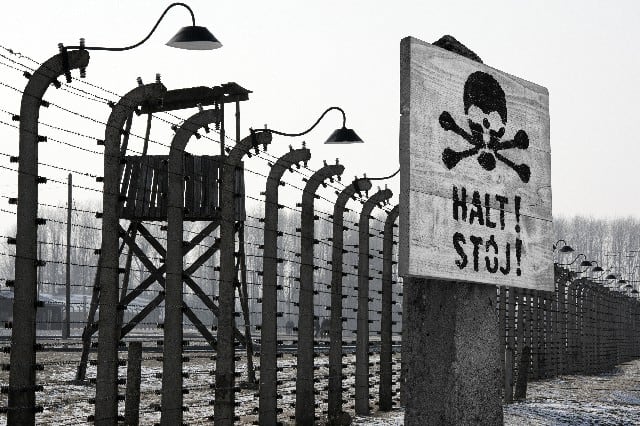
The award was given after her visit commemorating the victims of the holocaust at the Auschwitz-Birkenau Camps.

Metsola also laid a wreath at the so-called Death Wall and participated in a memorial ceremony.

Metsola pledged to honour the legacy of the Holocaust victims “by never forgetting, by never being indifferent, and by always, always speaking up”.

“At this place of horror, we must find hope. Our promise to those lost and to those who survived is to remember, to never be silent and to build a new world in their memory. We remember”, said President Metsola at the end of her visit to the Auschwitz-Birkenau Camps.

timesofmalta

Proposed animal welfare bill in Poland is 'of deep concern to European Jewry'

Rabbi Menachem Margolin: “This draft law puts unproven and unscientific claims about animal welfare above freedom of religion, breaching a central pillar of the EU’s charter of fundamental rights.”

A proposed legislation in Poland to ban religious slaughter of animals for export “is of deep concern to European Jewry,” said Rabbi Menachem Margolin, chairman of the European  Jewish Association (EJA) on Thursday (1 October), writes Yossi Lempkowicz.
The so-called animal welfare bill, proposed by the ruling Law and Justice party (PiS), has passed the Chamber of deputies or Sjem and now seeks approval in the Senate.
It could have massive ramifications for European Jewish communities as it would see a central and vital part of a Jewish practice, the shechita,  that has taken place for millennia trampled on and effectively wiped out – the access to and supply of kosher meat.
For European Jews, the legislation also carries with it multiple red and flashing alarms. History has repeatedly shown that the opening salvo in attempts to punish, ostracize, marginalize and ultimately destroy Jewish communities always starts with bans on central tenets of Jewish faith such as kosher laws and circumcision, before moving into much darker territory.
Animal welfare activists oppose the slaughter of animals for kosher meat because it precludes stunning before the animals’ throats are cut. Proponents of the practice reject claims it is cruel and say it induces a quick and humane death for the animal.
“This draft law puts unproven and unscientific claims about animal welfare above freedom of religion, breaching a central pillar  of the EU’s charter of fundamental rights,’’ said Rabbi Margolin in his statement.
In its Article 10, the charter states: “Everyone has the right to freedom of thought, conscience and religion. This right includes freedom to change religion, belief and freedom, either alone or in community with others, and in public or private, to manifest religion or belief, in worship, teaching, practice and observance.”
 The bill, noted Margolin “so alarmingly seeks to control and put a headcount on Jewish practice by giving the Minister of Agriculture the power to determine the qualifications of persons performing religious slaughter”.
The ‘schochet’, the person who is tasked with performing the slaughter undertakes years of ongoing training and is committed to, under strict Jewish law, ensuring that the animal undergoes the least suffering and stress as possible leading up to and during the slaughter itself, the rabbi explained.
He continued: “The draft law will also require a determination of the quantity of kosher meat needed by the local Jewish community. How is this to be done? by creating and supervising  a list of Jews in Poland”? This law, if passed, carries with it a dark and sinister undertow for Jews, a harking back to occupation, where practice and belief were initially targeted as first steps on the road to our eventual destruction.”
Poland is one of the biggest European exporters of kosher meat.
“European Jewry has enjoyed a fruitful and cooperative relationship with Poland as a principal supplier of kosher meat to our communities. Poland, in fact, is a central supplier to our needs. The question has to be asked, why now? To what end?” asked Rabbi Margolin, who urged  the Polish government, its parliament, its Senators and the Polish President to stop this law.
“Not only to uphold the values enshrined in the European Charter of fundamental rights protecting freedom of religion but to give a clear statement of solidarity that it will stand with and support European Jewry as an intrinsic part of Europe’s social fabric, and not sacrifice us, our beliefs and practice on the altar of politics,” Rabbi Margolin concluded.
The article was published on eureporter

Additional Communities
United State
United Kingdom
Ukraine
Turkey
Schweiz
Switzerland
Sweden
Spain
Slovenia
Slovakia
Serbia