Jewish group urges halt to Nazi memorabilia auction featuring Hitler’s wristwatch

In an open letter co-signed by 34 Jewish leaders, the Brussels-based European Jewish Association (EJA) called for Maryland-based Alexander Historical Auctions to abandon its sale of a slew of Nazi objects.

The items auctioned by the broker include a gold watch and candy bowl belonging to Adolf Hitler, and items belonging to his partner, Eva Braun, including a dress and dog collar for her terrier.

Also on sale are Wehrmacht toilet paper and the cutlery and champagne glasses of senior Nazi figures.

The highest valued item — the watch belonging to Hitler — was expected to fetch between $2 million (€1.97 million) and $4 million. The sale was taking place over two days from Thursday to Friday.

Additional Articles

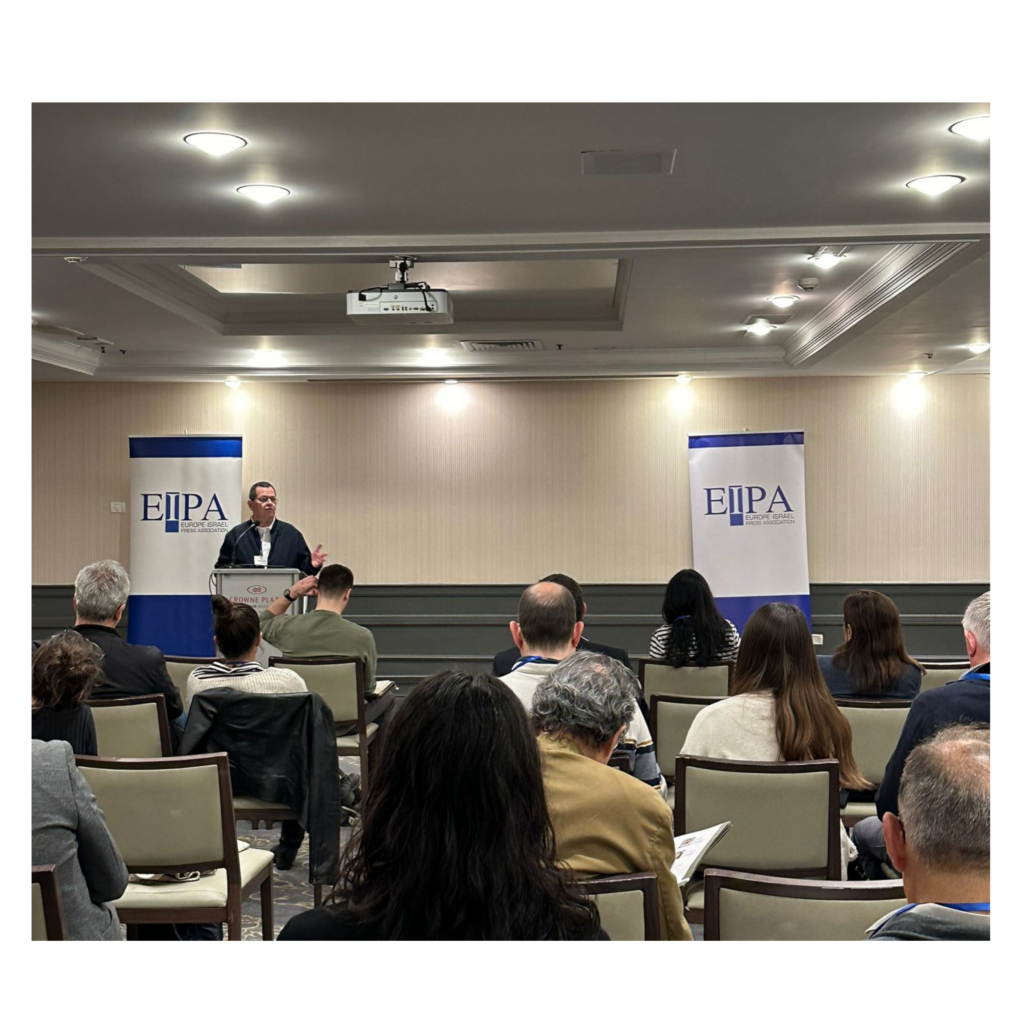
EIPA Organizes Insightful Press Trip to Israel: Briefings by Israeli Defence Ministry Official and Education Expert

Our EIPA colleagues are organising a press trip to Israel. Yesterday, participants were treated to a thought-provoking briefing and geopolitical overview of the Middle East by Zohar Palti, head of the Political-Military Bureau at Israel Ministry of Defense. Palti, who has a distinguished background including leadership roles in Mossad’s intelligence directorate and the IDF Intelligence Corps Research Division, provided invaluable insights.

Additionally, Marcus Sheff, CEO of The Institute for Monitoring Peace and Cultural Tolerance in School Education (IMPACTse), delivered an enlightening briefing. Based in London and Tel Aviv, Sheff has spent over a quarter of a century analysing global curricula to foster peace and tolerance in line with UNESCO standards. His policy recommendations have significantly influenced systematic reforms in national curricula worldwide.

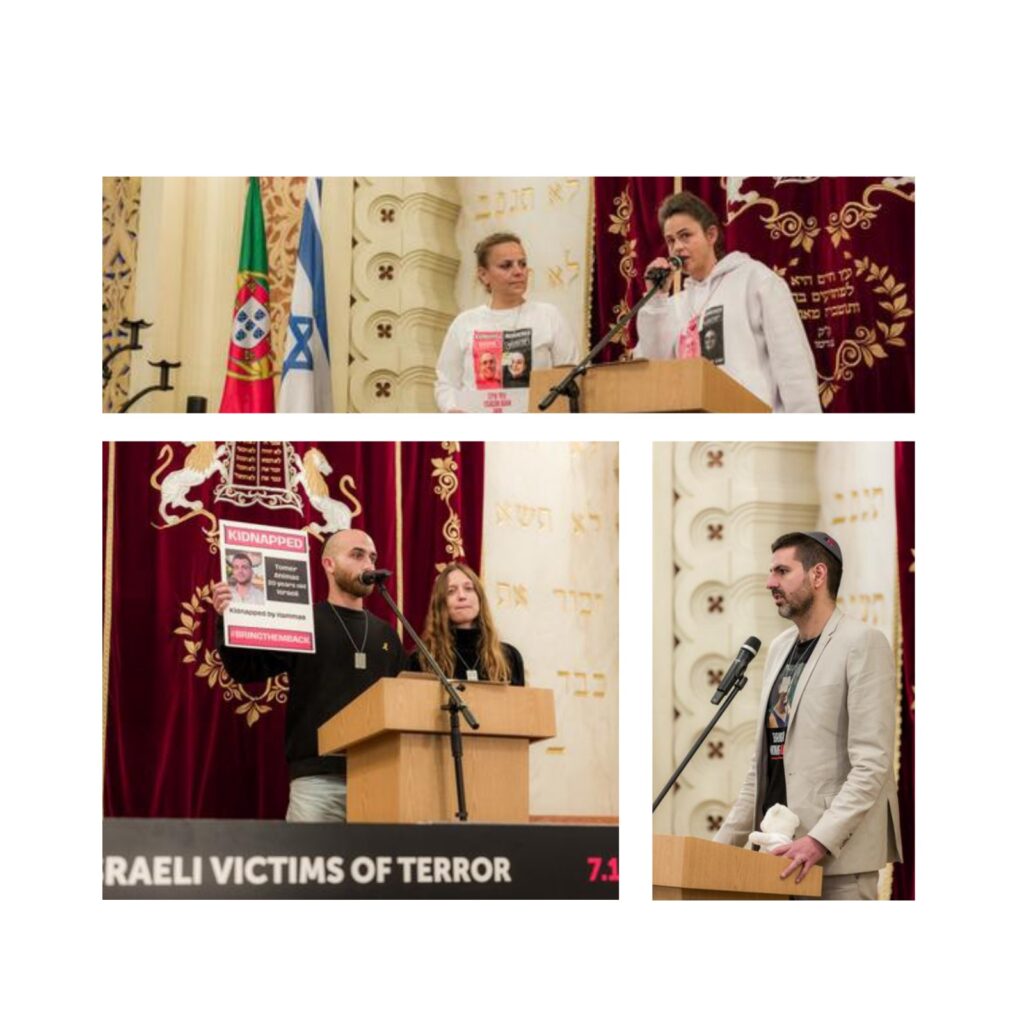
The Oporto Jewish community welcomed seven hostage families, pledging relentless support.

We commend our partner in Portugal for their unwavering dedication. The Oporto Jewish community welcomed seven hostage families, pledging relentless support. Here’s an excerpt from Gabriel Senderowicz Mold’s speech:

Our tireless efforts to assist the hostages:

First to alert the President & media about Portuguese citizens among hostages, urging Qatar’s aid.
Advocated for broader diplomatic ties to secure freedom for Portuguese citizens.
Expedited nationality certification for those with Sephardic roots.
Urged prompt action from the Registry Office.
Applied pressure on Portuguese authorities through media channels.
Took legal action when registry decisions fell short.

The battle continues: We’re still in court fighting for the rights of the late Ravid Katz’s family.

Which European countries are best for Jews? A new study offers unexpected answers.

BUDAPEST (JTA) — Antisemitic sentiment is especially prevalent in Italy and Hungary, according to multiple surveys. But a first-of-its-kind index combining different measures of Jewish experience found that they are also the best countries in Europe for Jews to live in.

The index, unveiled Monday, is based on a study that combines polling data and policy information to create a single quality-of-life metric for Jews in the 12 European Union countries with sizable Jewish communities, according to Daniel Staetsky, a statistician with the London-based Institute for Jewish Policy Research who wrote the report for the European Jewish Association in Brussels.

“The goal with this report is to take the excellent data we already have about how Jews feel, about how prevalent antisemitism is, and combine it with government policy measurables,” Staetsky said during a conference held by the European Jewish Association in Budapest.

He said the results may challenge preconceptions about which EU countries are most hospitable to Jews. For example, Germany scored high when it came to government policies relating to Jews. But Jews there report a weak sense of security, leading to an overall middling score.

The index is primarily a tool “to demand concrete action from European leaders,” Rabbi Menachem Margolin, head of the European Jewish Association. “We welcome statements against antisemitism by European leaders. But more than statements is needed.”

The European Jewish Association will make individual recommendations to each country surveyed, Margolin added at the press event. It was part of a two-day event sponsored by multiple Jewish organizations, including the Consistoire in France, the Jewish Agency for Israel and the Israeli government, about how European Jewish communities can aid the one in Ukraine.

Titled “Europe and Jews, a country index of respect and tolerance towards Jews,” the study gives Belgium, Poland and France the lowest scores with 60, 66, and 68 points out of 100, respectively. The three top countries have 79, 76 and 75 points, followed by Britain and Austria (75), the Netherlands, Sweden, Germany and Spain (74, 73, 72, 70.)

To come up with the ranking, Staetsky gave each surveyed country grades on multiple subjects, including the Jewish sense of security, public attitudes to Jews and the number of Jews who said they’d expereinced antisemitism. The grades were based on major opinion polls in recent years, including those conducted by the Action and Protection League, a group that monitors hate crimes against Jews in several European countries, and the European Union’s Fundamental Rights Agency.

The study combined those scores with scores the author gave to countries’ government policies, including their funding for Jewish communities, whether they had adopted a definition of antisemitism, and the status of Holocaust education and freedom of worship.

Under that scoring system, Germany received an overall score of 72 despite having the best score (89) on government performance on issues related to Jews and a solid 92 when it came to the prevalence of antisemitism. But a relatively low score on Jewish sense of security (46) hurt its overall score, among other factors.

In the case of Hungary, “the score it received reflects the reality on the ground,” according to Shlomo Koves, the head of the Chabad-affiliated EMIH umbrella group of Jewish communities in Hungary. “Jews can walk around here, go to synagogue, without the slightest fear of harassment,” he said.

But the prevalence of antisemitic sentiments in Hungarian society — an Anti-Defamation League survey from 2015 found that about 30% of the population hold them — “shows there is work to be done here, too, in education and outreach,” Koves said.

This article originally appeared on JTA.org.

Nearly 60% increase in antisemitic incidents in 2023 - Combat Antisemitism

Combat Antisemitism Movement’s (CAM) report documented 3,046 reported incidents globally, a 58.2% increase from 1,925 the previous year and 2,215 in 2021.

Jpost: https://www.jpost.com/diaspora/antisemitism/article-787273Combat Antisemitism Movement’s (CAM) report documented 3,046 reported incidents globally, compared to 1,925 the previous year and 2,215 in 2021 – another year when antisemitism increased globally amid Israeli conflict with Hamas.

Antisemitic incidents caused by far-left (1,019 reported incidents) and far-right (1,021) perpetrators were almost identical and accounted for 67% of all recorded incidents. Islamic extremists accounted for 18.7% of all recorded antisemitic events (571), while 14.3% were categorized as unattributable (435).

The CAM report analyzed antisemitism trends in the USA, United Kingdom, Germany, the Middle East, and the rest of the world as a separate category. The report analyzed 1,174 incidents in the USA, 292 in the United Kingdom, 134 in Germany, 334 in the Middle East, and 776 in other countries around the world.

Israeli Americans and supporters of Israel gather in solidarity with Israel and protest against antisemitism, amid the ongoing conflict between Israel and the Palestinian group Hamas, during a rally on the National Mall in Washington, U.S, November 14, 2023. (credit: REUTERS/Elizabeth Franz)

Antisemitism takes on different forms, yet persists

The antisemitic behavior analyzed in the report took on different shapes depending on the geographic location in question. For example, 49.5% of incidents in the USA were committed by right-wing perpetrators compared to 29.7% from far-left antisemites. However, the UK had 40.4% of their incidents perpetrated by supporters of left-wing ideology in comparison to 20.2% from the right-wing.

Further, only 5.2% of US-based incidents were Islamic, whereas that figure stood at 15.8% in the UK, 14.2% in Germany, and 94.3% in the Middle East.

The antisemitic incidents also differed in nature based on geography: 76.9% of Middle East incidents included hateful conduct and speech, 20.7% included use or threats of violence, and 2.4% were acts of vandalism. While the UK had a similar profile for hate speech (75.7% of incidents), vandalism was prevalent nearly six times more than in the Middle East (13.7%) and violence was nearly half (10.6%).

American antisemites were far less likely to utilize hate speech (52%) and had by far the highest rate of vandalism (39.7%) among the areas surveyed.

The report further identified four concerning trends based on their data: the rise of left-wing antisemitism, the increase on US college campuses, the persistence of right-wing antisemitism, and the significant year-over-year spike in 2023.

The CAM report said 2024 was the first year since they began tracking antisemitic incidents that the frequency of left-wing incidents was nearly the same as right-wing incidents. The report also highlighted the spike in campus antisemitism, with a notable 34.9% increase in reported antisemitic incidents on US campuses in 2023.

Additional Communities
United State
United Kingdom
Ukraine
Turkey
Schweiz
Switzerland
Sweden
Spain
Slovenia
Slovakia
Serbia