
European Jewish Association accuses Belgian magazine of ‘incitement to murder’ Jews

Additional Articles

Remembering the horrors of Auschwitz, German chancellor warns of antisemitism, threats to democracy

The Independent: https://www.independent.co.uk/news/world/europe/olaf-scholz-ap-germans-jews-auschwitz-b2485902.html


Chancellor Olaf Scholz on Saturday called on all citizens to defend Germany’s democracy and fight antisemitism as the country marked the 79th anniversary of the liberation of the Nazi death camp Auschwitz-Birkenau during World War II.

Since 1996, Germany has also marked January 27 as a day to remember the horrors of the Holocaust.

“’Never again’ is every day,” Scholz said in his weekly video podcast. “January 27 calls out to us: Stay visible! Stay audible! Against antisemitism, against racism, against misanthropy — and for our democracy.”

On that day in 1945, Soviet Red Army troops liberated some 7,000 prisoners at Auschwitz in German-occupied Poland. The Nazis murdered more than a million people in Auschwitz, most of them Jews.

In the days before the liberation, the Germans had evacuated tens of thousands of other inmates on foot in what is now called the Death March, because many inmates died of exhaustion and cold in the sub-freezing temperatures.

Altogether, they killed six million European Jews during the Holocaust.

On Saturday, as people in Germany put down flowers and lit candles at memorials for the victims of the Nazi terror, the German chancellor said that his country would continue to carry the responsibility for this “crime against humanity.”

He stressed that the fight against any kind of antisemitism and for democracy is not something that can be done by the government only, but needs the support of all Germans.

“Never again” demands the vigilance of everyone,” Scholz said. “Our democracy is not God-given. It is man-made.”

“It is strong when we support it,’ he added. ”And it needs us when it is under attack.”

Scholz referred specifically to the threat posed by the rise of far-right populists in Germany, elsewhere across Europe and worldwide “who are stirring up fears and sowing hatred.”

At the same time, the chancellor praised the millions of Germans who have joined pro-democracy protests in recent weeks.

“Our country is on its feet right now. Millions of citizens are taking to the streets: For democracy, for respect and humanity,” he said, adding that it was their solidarity “that makes our democracy strong. Showing it confidently in public — as is happening now — is a good thing.”

A report that right-wing extremists recently met to discuss the deportation of millions of immigrants, including some with German citizenship triggered massive demonstrations across the country. Some members of the far-right Alternative for Germany party, or AfD, were present at the meeting.

Growing anxiety over the AfD’s rising support among the German electorate also catalyzed pro-democracy protesters.

The AfD was founded as a eurosceptic party in 2013 and first entered the German Bundestag in 2017. Polling now puts it in second place nationally with around 23%, far above the 10.3% it won during the last federal election in 2021.

The party enjoys major support and is leading in eastern Germany, including the states of Brandenburg, Saxony and Thuringia, slated to hold elections this fall.

One of the oldest German Holocaust survivors, 102-year-old Margot Friedlaender expressed concern about the the spike in antisemitic incidents in the country.

“I would never have thought that it would happen like this again, because that’s how it started back then,” she said on public Television ARD on Friday, referring to the rise of the far-right. Friedlaender said for those of endured the horrors of the Holocaust it is “particularly difficult to understand and very sad.”

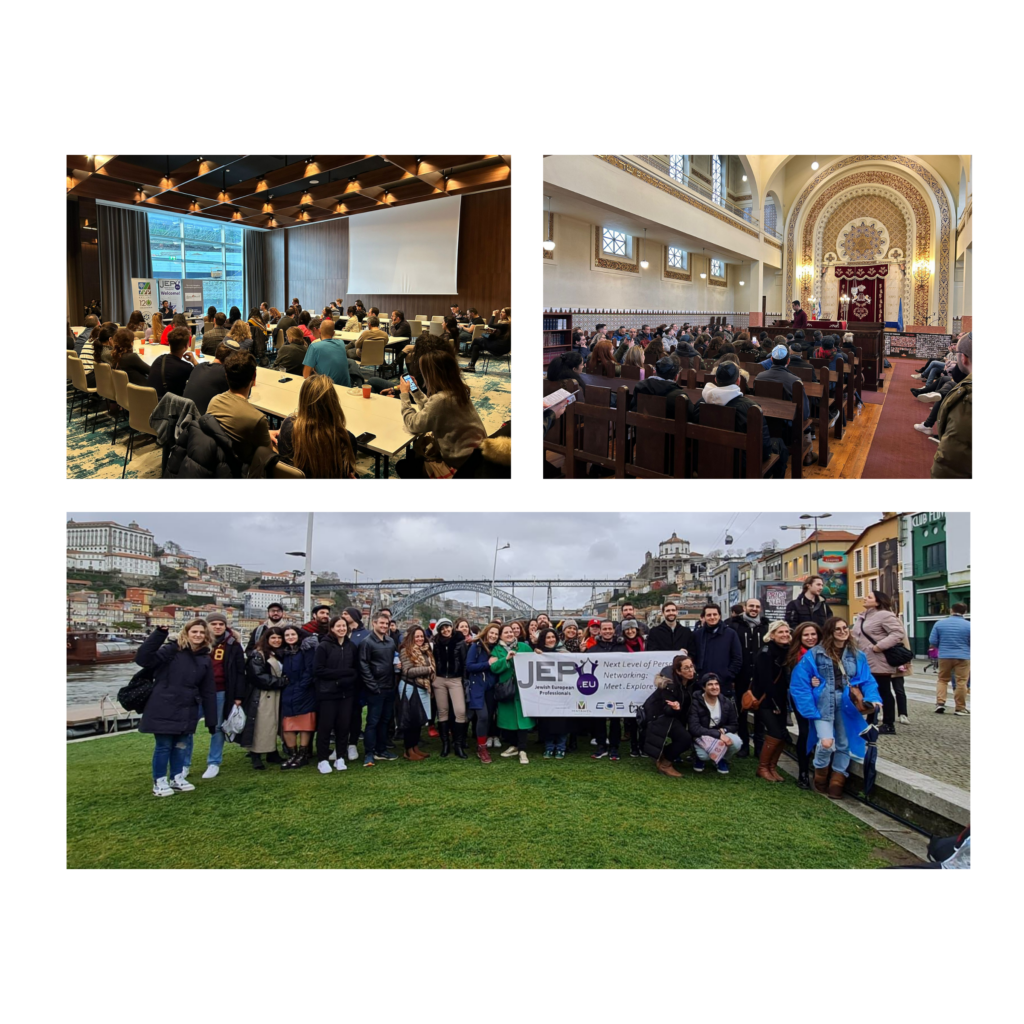
JEP Unites 150 Young Professionals from Across Europe in Porto for a Dynamic Weekend of Networking and Learning

During the weekend, JEP (Jewish European Professionals) orchestrated an event that brought together 150 young professionals from across Europe in the dynamic city of Porto, Portugal. It was an enriching experience brimming with networking opportunities, learning, and enjoyment!

First candle of Chanukah- #LightingEurope

Chanukah is here. It’s the time of the year when we come together with our loved ones to celebrate the miracle of the Maccabees by lightning the menorah.
In many cultures, light symbolizes positivity and hope. We all know this year was not easy, to say the least, for many people around the world and specially here in Europe. This Chanukah we have the opportunity to join our lights together, to share the hope and faith for a better future for all of us.
As the famous Jewish song say: “each of us is a small light and together we are a mighty light”.
We invite you all, Jews and non-Jews to join us this Chanukah in choosing hope, and focussing on the the bright and good. Together we will spread our light throughout Europe!
To join us you simply need to take a picture (or a video) of yourself lighting the candles (or just your Menurah) during the 8 days of Hanukah (10-18 Dec) and post it on social media with the hashtag #LightingEurope.
Happy Chanukah!

European Jews face new threat in wake of COVID-related anti-Semitism

Top European rabbi tells Israel Hayom a special center to monitor real-time incidents via remote feeds could be established in order to tackle anti-Jewish attacks.
The recent terrorist attacks in Austria and France, as well as the spike in coronavirus cases in Europe, has created a fear among Jews in the continent that anti-Semitic conspiracy theories blaming Jews for the spread of the pandemic could become mainstream.
 
A recent study in Germany showed that one in three Germans has somewhat of a conspiratorial view of the world.
 
Felix Klein, who is the federal commissioner for Jewish life in Germany and the fight against anti-Semitism, told Israel Hayom that the recent protests against the COVID-19 regulations have become fertile ground for anti-Jewish sentiment.
 
“The current protests against corona-related restrictions serve as a rallying point for antisemites, Holocaust deniers, and believers in conspiracy myths. At “hygiene protests”, participants downplay the Holocaust by, for example, comparing the current requirement to wear a face mask with the obligation to wear a Star of David during the Nazi regime,” he told Israel Hayom. “Portraying themselves as rebels – as do for example the supporters of the new political party Widerstand2020 (Resistance2020) and the Reichsbürger movement – is typical of adherents to anti-Semitic beliefs: Presenting oneself as breaking taboos, as ‘finally’ bringing the truth to light, as showing at last who is pulling the strings behind the scenes – and, as has been done for thousands of years, pointing their fingers once again at Jews,” he added.
 
When asked about the danger posed by such conspiratorial views, he noted that there is a concern verbal statements could eventually morph into action.
 
“Conspiracy myths also prepare the ground for violence, as history has shown. Those who perceive themselves as victims and feel threatened can themselves turn into a threat. Anti-Jewish pogroms throughout history have been the fatal consequence of such obsessive hatred of Jews, as have the antisemitic terrorist attacks worldwide in recent years,” he said. “A recent study has shown that radicalization online takes place four times faster than offline. That is what makes it so important to quickly adjust our laws. This is the thrust of the package of measures put forward by the federal government. I am confident we can achieve a lot through a combination of repression and education. After all, what is ultimately at stake is social cohesion in times of crisis.”

Meanwhile, Jewish groups have scrambled to deal with the threat of rising anti-Semitism in the age of coronavirus. The group “Concert – Together for Israel” strives to bolster Israel’s image and fight modern anti-Semitism, says its job has been made much more difficult in the wake of the pandemic, and many pro-Israel groups are facing potential elimination.
 
“Generally speaking, one can say that small organizations that rely on a small staff expect a slowdown and a long recovery, but the big organizations that need a large operation worry about their long-term viability in light of the added costs,” Nava Edelstein, the group’s program director says.
 
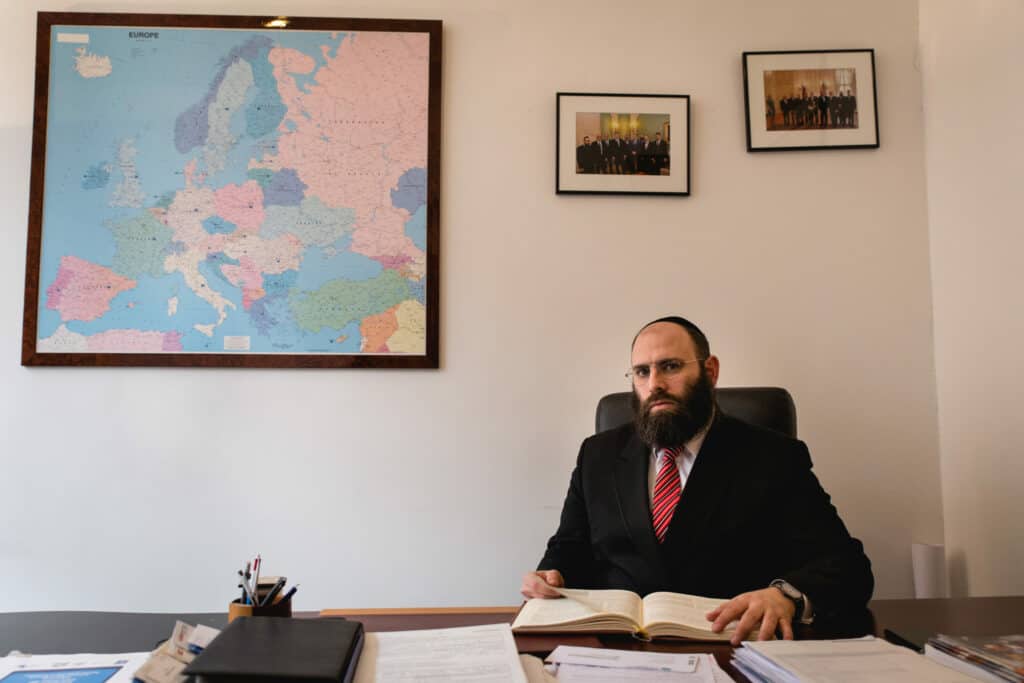
Rabbi Menachem Margolin, the head of the Brussels-based European Jewish Association that has led a comprehensive effort to counter anti-Semitism in Europe, told Israel Hayom that he has been overseeing a “virtual command center” that gets daily updates from Jewish communities on online anti-Jewish attacks.
 
“We constantly see how anti-Semitic voices on the web attribute the virus to a Zionist-Jewish conspiracy, on top over other forms of anti-Semitism that involve graffiti and vandalizing of Jewish institutions,” he said, adding the largest volume of reports originates in France, Romania and Belgium.
 
“We are considering setting up a center that would monitor events through Jewish communities’ video feeds in real time, so that we can alert security forces when such incidents happen,” he revealed.
The article was published in Israel Hayaom

Additional Communities
United State
United Kingdom
Ukraine
Turkey
Schweiz
Switzerland
Sweden
Spain
Slovenia
Slovakia
Serbia